
Annual Report 2025–26
Education • Health • Skills • Adolescent participation

Message from our Founder
The work of I-India continues to be shaped by children and families who meet difficult circumstances with courage and determination. During April 2025 to March 2026, our teams connected children from disadvantaged background with formal education, healthcare, practical skills and opportunities for adolescents to participate in the reimagination and development of inclusive public spaces around them.
Our three school projects recorded 1,004 student beneficiaries. The health programme documented 6,449 service contacts across urban and rural work. Vocational training recorded 151 course enrolments, and 30 adolescent activities generated 2,061 participant attendances. Each number represents a different form of support, and each rests on the dedication of our staff, volunteers and partners.
We thank our long-standing partners and those who have supported I-India and the children and young people who inspire this work. We remain committed to providing care, education and opportunity with dignity to those who need them most.
Prof. Prabhakar GoswamiFounder
About I-India


Founded in Jaipur in 1993, I-India works with street/slum children, adolescents, women and underserved communities. Its community-based approach connects education, healthcare, nutrition, child protection, vocational skills and adolescent participation. The organisation works in Jaipur and surrounding rural communities.

Vision
A safe, enriching and empowering world in which every child can develop to their full potential, regardless of background or circumstance.

Mission
To provide care, education, healthcare and opportunities for children and communities facing poverty and exclusion, with priority for those in greatest need.

Philosophy
- Help as many children as possible
- Focus on those in greatest need
- Do not discriminate or avoid difficult cases
Programmes 2025–26
 EducationThree formal school projects and educational support
 Care and protectionCare and child protection approach
 HealthSchool check-ups, outreach, treatment, diagnostics and referrals
 Skills and adolescentsVocational courses, public space activities and the Public Space Lab

Highlights of the year 2025–26

 1,004student beneficiaries at three formal school projects
 530girls enrolled, representing 52.8% of students
 6,449documented health service contacts in Jaipur and the rural programme
 2,475beneficiaries served from urban and village through mobile health outreach camps
 884blood and urine tests at Guru Arogya Health Centre
 151vocational course enrolments across three training streams
 2,061adolescent and community members participated in empowerment activities
Formal Education

Education remains a central part of I-India's work with children facing poverty, social exclusion and barriers to regular schooling. The three projects in partnership with Flowering Tree Inc. aim to give children a stable learning environment alongside the practical support needed to attend school. During 2025–26, the beneficiary records covered 1,004 students across the three schools.
Free School Education Statistics ReportAcademic year 2025–26 | Three school projects

I-India enabled 1,004 children to continue learning free of cost, with comprehensive support designed to remove financial and access barriers.
- 1,004student beneficiaries
- 100%received free education
- 52.8%girls' participation
- 99.6%recorded disadvantaged
- 685through urban projects
- 319through the rural Jhag project
Consolidated statistics
Across the three projects, every beneficiary was recorded as receiving free education, free textbooks and free transport. Nearly all students—1,000 of 1,004—were explicitly recorded as belonging to a disadvantaged group.
| Indicator | Students | Share |
|---|---|---|
| Total beneficiaries | 1,004 | 100.0% |
| Girls | 530 | 52.8% |
| Boys | 474 | 47.2% |
| Recorded disadvantaged group | 1,000 | 99.6% |
| Free education | 1,004 | 100.0% |
| Free textbooks | 1,004 | 100.0% |
| Free transport | 1,004 | 100.0% |
| At least one uniform set | 1,004 | 100.0% |
School-wise statistics
| School project | Total | Girls | Boys | Disadvantaged | Free education |
|---|---|---|---|---|---|
| Prem-Pathshala Bhankrota | 360 | 186 (51.7%) | 174 (48.3%) | 360 (100.0%) | 100% |
| Prem-Pathshala Jhag | 319 | 177 (55.5%) | 142 (44.5%) | 319 (100.0%) | 100% |
| Shwetaark Pathshala | 325 | 167 (51.4%) | 158 (48.6%) | 321 (98.8%) | 100% |
| Total | 1,004 | 530 (52.8%) | 474 (47.2%) | 1,000 (99.6%) | 100% |
School highlights

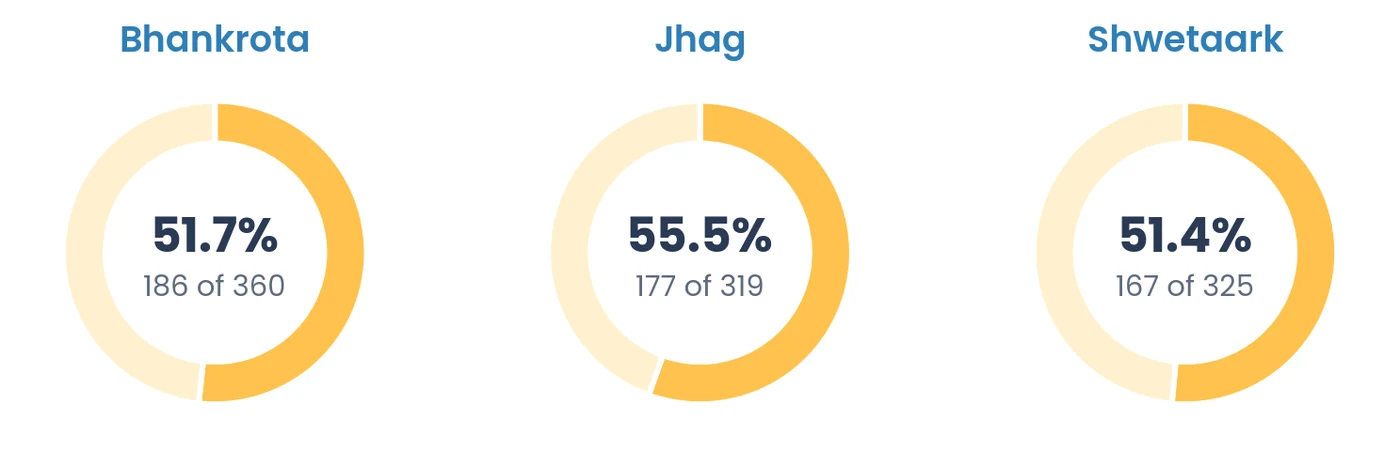
Prem-Pathshala Bhankrota reached 360 children in an urban project setting; 186 were girls (51.7%). All 360 were recorded as disadvantaged and receiving free education.

Prem-Pathshala Jhag reached 319 children through the rural school project; 177 were girls (55.5%), the highest girls' share among the three schools. All 319 were recorded as disadvantaged and receiving free education.
Shwetaark Pathshala reached 325 children in Jaipur's urban setting; 167 were girls (51.4%). It recorded 321 children (98.8%) as disadvantaged, while all 325 received free education.
Girls' education and equitable access
Girls were the majority in every school
The programme enrolled 530 girls—52.8% of all beneficiaries—indicating that girls' participation was not confined to one location but sustained across all three projects.
Urban and rural reach
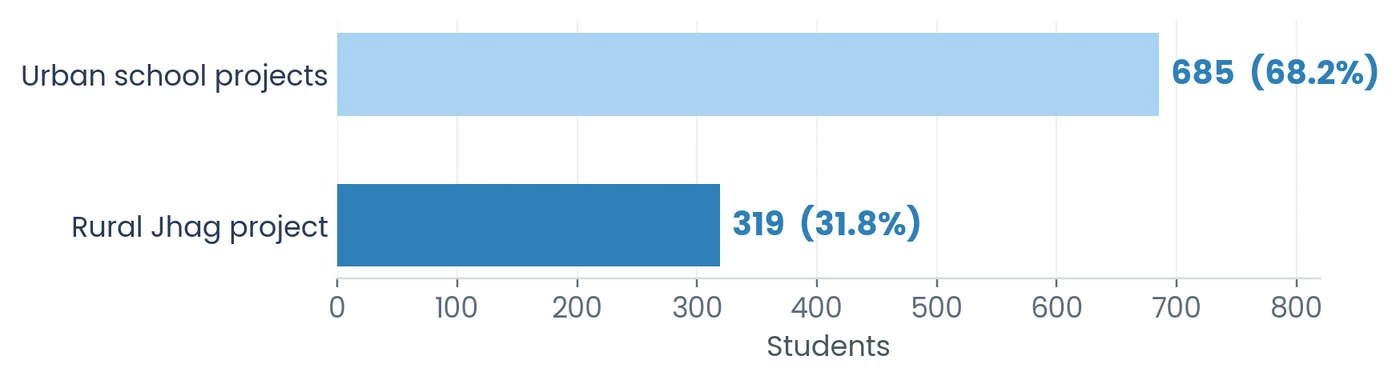
Through Prem-Pathshala Bhankrota and Shwetaark, I-India provided free schooling to 685 children in urban project settings linked to Jaipur's low-income and slum communities. Through Prem-Pathshala Jhag, 319 children were reached in a rural project setting serving dispersed village communities. This combination allows the programme to address barriers that differ by geography: poverty and precarity in urban settlements, and distance and limited access in rural areas.
Removing the cost barriers to education
Free enrolment was reinforced by practical support. Every student record confirms free textbooks and transport, and every child received at least one uniform set. Together, the schools distributed at least 1,028 uniform sets.
- Free education
 Free textbooks
 Free transport
 Uniform sets
| Support provided | Bhankrota | Jhag | Shwetaark | Total |
|---|---|---|---|---|
| Free education | 360 | 319 | 325 | 1,004 |
| Free textbooks | 360 | 319 | 325 | 1,004 |
| Free transport | 360 | 319 | 325 | 1,004 |
| Children with ≥1 uniform set | 360 | 319 | 325 | 1,004 |
| Minimum uniform sets distributed | 384 | 319 | 325 | 1,028 |
Annual-report conclusion
In 2025–26, I-India's three school projects translated the principle of education as a right into practical access for 1,004 children. The programme combined free schooling with books, uniforms and transport; prioritised children from disadvantaged backgrounds; reached both urban settlements and rural communities; and maintained a girls' majority in every school.
Geographical reach
Target group
Children aged 6–18 years living below the poverty line, including:
 Street/Slum children
 Child laborers
 Children of daily wage workers
 Rural children living below poverty line
 Children from migrant or displaced families
Project/school details
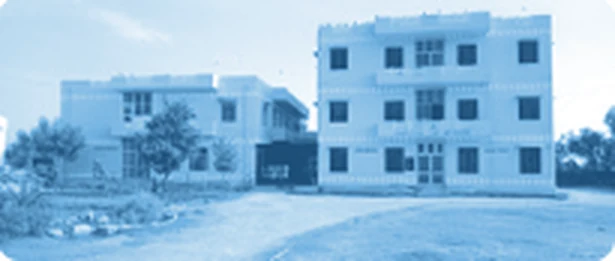
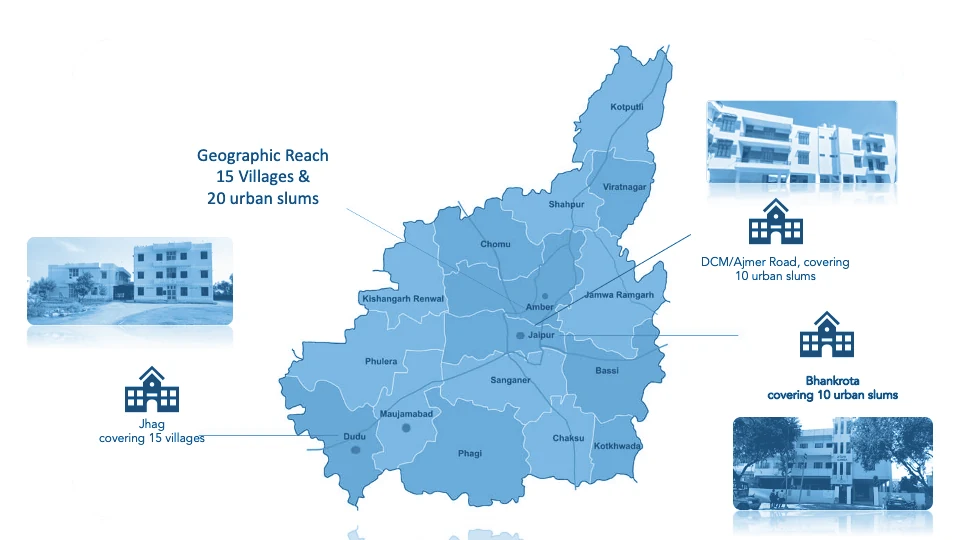
Prem-Pathshala Jhag (rural), a higher secondary school (1-12th Std/recognized by State Government) for BPL children in village Jhag of Dudu Block, the project is providing free formal education to children belonging 15 small villages.
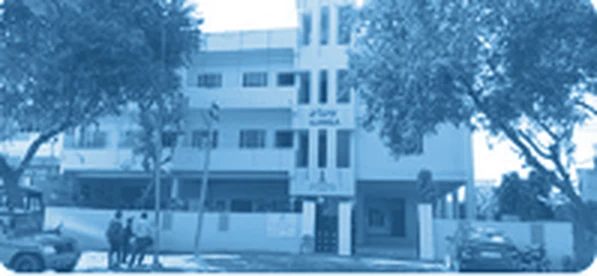
Prem-Pathshala Bhankrota (urban), a middle level school (1-8th Std/recognized by State Government) for the children of urban poor & slum dwellers in Jaipur, the project is providing free formal education to children belonging 10 urban slums around Bhankrota area of Jaipur city.

Shwetaark-Pathshala DCM (urban), a middle level school (1-8th Std/recognized by State Government) for the children of urban poor & slum dwellers in Jaipur, the project is providing free formal education to children belonging 10 urban slums around DCM/Ajmer Road area of Jaipur city.
Health Care and Medical Assistance

Health Care & Medical Outreach ProgramJaipur Urban Outreach & Guru Arogya Health Centre, Jhag
A child cannot learn if she is unwell. Untreated infections, hidden anaemia, poor eyesight or a missed referral can quietly push the most disadvantaged children out of the classroom and deeper into poverty. I-India's health programme exists to stop that from happening, by taking doctors, nurses, medicines and diagnostics to the schools, slums and villages where these children live.
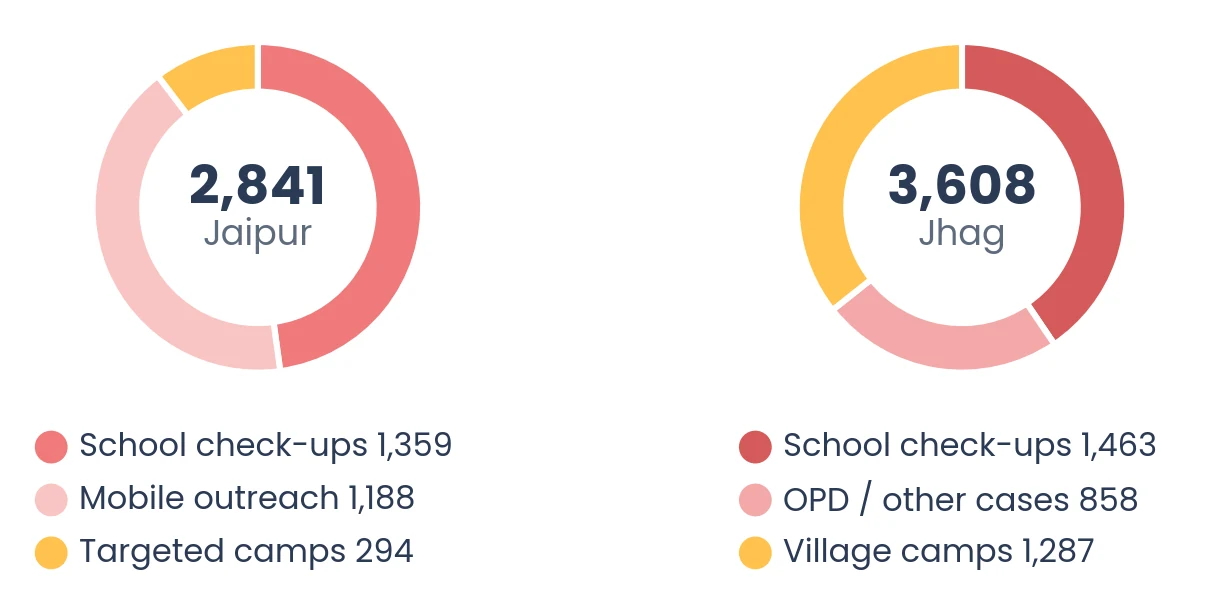
During 2025–26, I-India continued a dual health-delivery model: school-based preventive care and health education, OPD and basic treatment, and mobile and outreach medical services in the urban low-income communities of Jaipur and the rural settlements around Jhag. Bringing together the documented contacts from school check-ups, OPD and other medical cases and the different health camps, the programme recorded 6,449 health service contacts during the year, each one a moment when a child or family received care that might otherwise have been out of reach.
Program at a glance
 6,449documented health service contacts
- 2,841Jaipur service contacts
- 3,608Jhag service contacts
 2,822school health check-up contacts
- 80recorded outreach camps
 2,475mobile/village outreach beneficiaries
 858Jhag OPD / other medical cases
- 884Jhag blood + urine tests
How the programme reaches children
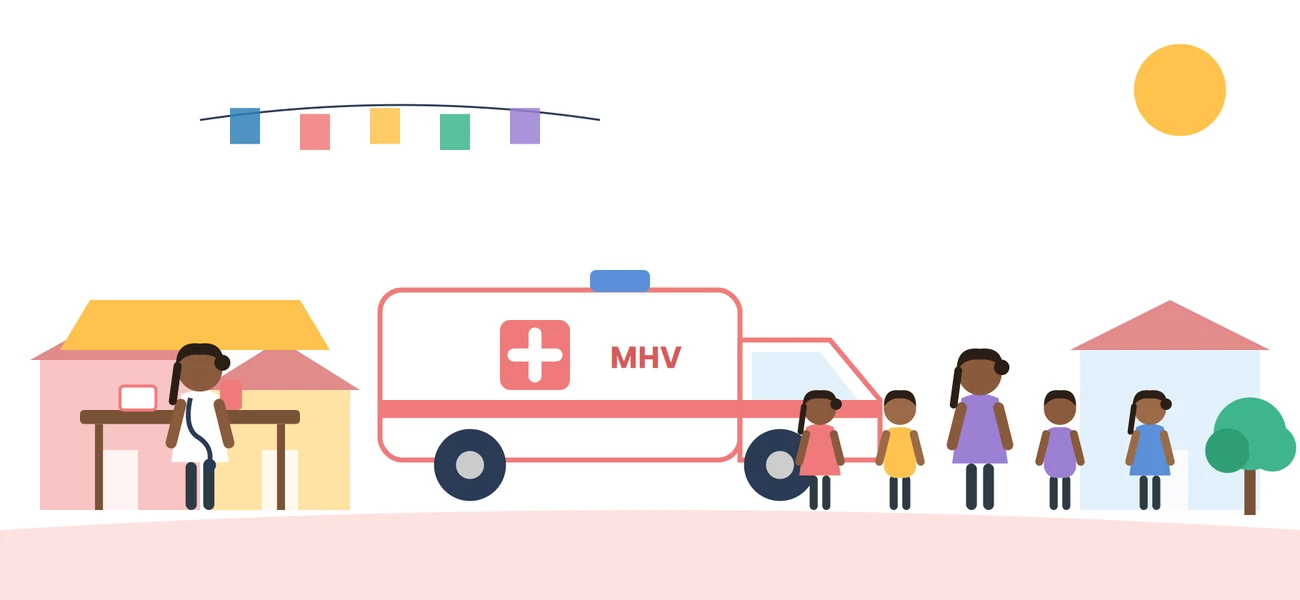
Through trained nursing staff, doctors and visiting medical consultants, I-India conducts regular mobile healthcare outreach across urban slums and street locations and remote rural settlements in the Jaipur region. The organisation also operates a six-bed health centre with an attached pathological laboratory in Jhag village. The programme provides on-the-spot medical care through two Mobile Health Vehicles (MHV), free medicines, pathological services, health awareness, referrals and support for institutional healthcare.
 Doctors, nurses & consultants
- 2 Mobile Health Vehicles
- 6-bed centre + pathology lab
 Free medicines
 Health awareness
 Referrals & institutional care
Jaipur urban health program
1. Jaipur – school health and community outreach
In the city, care goes to where children already are: in their classrooms at school projects, and in the slum and street communities their families call home.
The Jaipur health program combined regular school health check-ups at school projects with medical camps, ambulance and mobile outreach in vulnerable communities, health education, specialist eye screening and basic diagnostic support. Together, these documented activities account for 2,841 beneficiary/service contacts during 2025–26.
School health check-ups
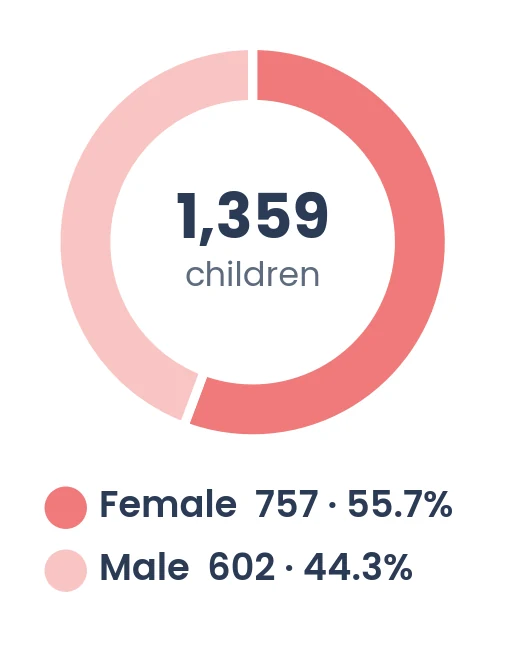
- 1,359 children received recorded health check-up services during the year.
- 602 male and 757 female beneficiaries were recorded.
- Female participation represented 55.7% of the recorded school health contacts; male participation was 44.3%. Girls, who are so often the last to be taken to a doctor, were the majority of those reached.
- Health education covered prevention, personal hygiene, oral hygiene, deworming/parasite awareness, nutrition, menstrual health and other age-appropriate health topics.
Health education topics
 Prevention
 Personal hygiene
 Oral hygiene
 Deworming / parasite awareness
 Nutrition
 Menstrual health
Community and specialist outreach
Beyond the school gate, the mobile team took care into the neighbourhoods where families struggle most to reach a clinic, and partnered with specialists to offer services that would otherwise be unaffordable.
Ambulance/mobile outreach camps: 39 recorded camp entries reached 1,188 beneficiaries across communities such as Baderwas, Ladli/Sodala, Vaishali Nagar, Mansarovar and Metro Station locations.

Maharana Pratap Garden camp, 24 April 2025: 114 people attended and were examined by specialist doctors, with basic testing provided.

ASG Eye Hospital camp, 3 November 2025: 145 beneficiaries were recorded in the eye screening camp conducted with ASG Eye Hospital.

Blood group testing, 8 November 2025: 35 Shwetaark Pathshala children had blood-group testing recorded.
Guru Arogya Health Centre – Jhag
2. Jhag – rural health centre, diagnostics and village outreach
For families in the villages around Jhag, distance and limited access can turn a simple illness into a crisis. Guru Arogya Health Centre closes that distance.
Guru Arogya Health Centre at Jhag served as I-India's rural health hub during 2025–26, supporting school children, village residents, OPD and other medical cases, outreach camps and referrals. Consolidating school medical check-ups, OPD/other cases and village outreach camps gives 3,608 documented beneficiary/service contacts during the year, alongside 884 laboratory tests.
- 1,463Prem Pathshala Jhag medical check-ups
- 858other medical cases attended
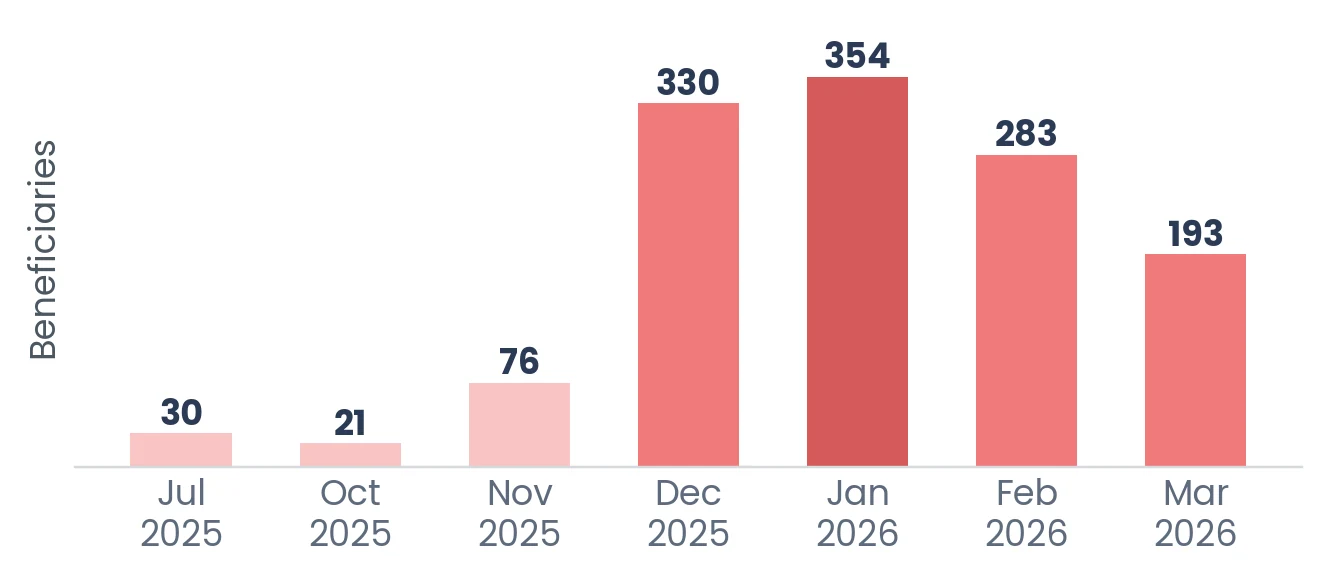
- 41village outreach camps
 1,287outreach camp beneficiaries
- 634blood tests
- 250urine tests
- 45critical cases referred
- 67highest beneficiaries in a single listed camp
Village outreach gathered real momentum in the second half of the year. From December 2025 to March 2026, camps reached 1,160 of the year's 1,287 outreach beneficiaries, with January 2026 alone reaching 354 people.
Key activities and outcomes
41 outreach village camps were recorded. The beneficiary table totals 1,287 contacts, averaging about 31 beneficiaries per camp.
45 critical cases identified through village camps were referred to higher centres for further treatment.
Eye-vision checks were conducted for Prem Pathshala Jhag classes, supported by health education on eye care.
Haemoglobin monitoring was undertaken for girls; the record notes treatment initiation for girls found anaemic.
Deworming tablets were provided at Prem Pathshala Jhag on 22 August 2025 through the Government of Rajasthan.
Menstrual-health awareness sessions were organised, with sanitary-pad distribution arranged where needed.

A World Breastfeeding Week workshop was organised on 5 August 2025 for women and female staff, with doctor/nursing inputs on breastfeeding benefits.

Nutrition Programme
Good health also begins on the plate. Under its Annapurna Project, I-India provides one fresh, warm and nutritious meal every day to over 1,000 children enrolled in its schools, centres and other project sites.
The programme also distributes dry-ration kits to families living in slums and economically disadvantaged communities, based on their needs and during emergencies.
Consolidated progress
3. Consolidated progress for 2025–26
Across Jaipur and Jhag, the program documented 6,449 beneficiary/service contacts through school health check-ups, OPD/other medical cases, mobile and village outreach camps, and targeted specialist activities. This combined picture demonstrates the scale of I-India's frontline health access during 2025–26, supported by diagnostics, health education and referral services.
| Indicator | Jaipur | Jhag |
|---|---|---|
| Consolidated beneficiary / service contacts | 2,841 | 3,608 |
| School health check-up contacts | 1,359 | 1,463 |
| OPD / other medical cases | – | 858 |
| Mobile / village outreach beneficiaries | 1,188 | 1,287 |
| Other documented camp / specialist contacts | 294 (114 + 145 + 35) | – |
| Laboratory diagnostics | 35 blood-group tests recorded | 634 blood + 250 urine tests |
| Specialist / referral care | 145-beneficiary eye camp | 45 critical cases referred |
Program significance
The 2025–26 records show that I-India maintained substantial frontline health access for children and underserved communities through school-based screening, OPD and basic treatment, community camps, mobile and ambulance outreach, laboratory testing and referral support. Preventive education remained woven into every service, particularly around hygiene, nutrition, menstrual health, anaemia, deworming, eye care and breastfeeding awareness.
Behind each of these 6,449 contacts is a child or a family who received care close to home, and with it a better chance to stay healthy, stay in school and build a future.
Vocational Training

Vocational Training & Adolescent EmpowermentProgress Report | April 2025 – March 2026
A skill is more than a certificate. For a young woman from a Jaipur slum, or a young person whose schooling was cut short, a marketable skill can mean a first income of her own, a stronger voice at home and the confidence to plan a different future. I-India's skills programme is built on that belief: that livelihood skills, joined with life skills and a real sense of agency, are one of the surest routes out of poverty for youth and women.
Building skills, agency and participation
During 2025–26, I-India combined practical vocational learning with structured adolescent empowerment activities. Vocational courses supported young people and women with digital, handicraft, tailoring and textile skills, while the Safe, Vibrant & Healthy Public Spaces initiative created opportunities for adolescents to learn, deliberate, engage with communities and actively participate in shaping public spaces.

Vocational training
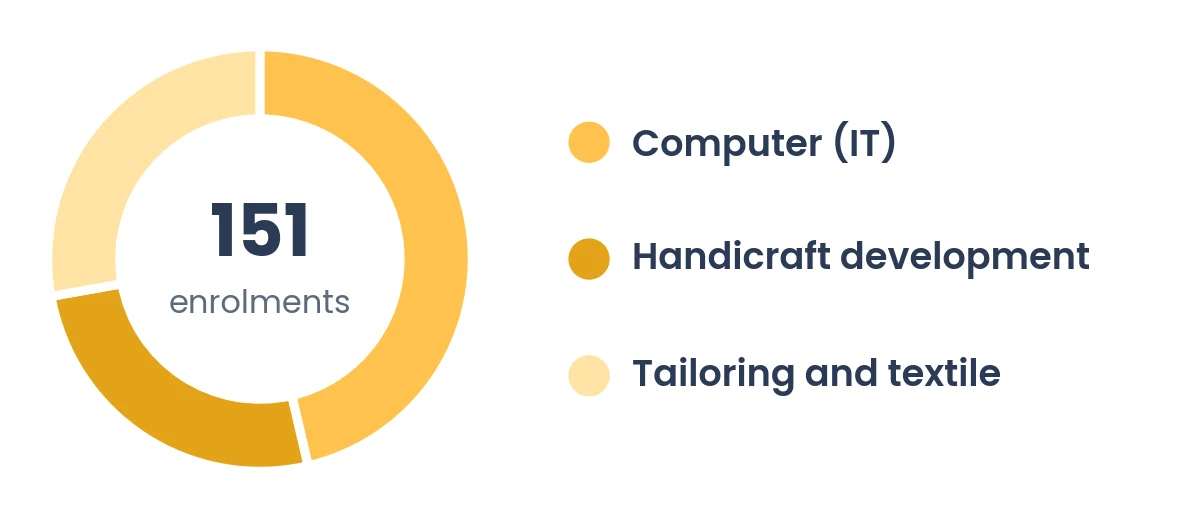
Three training streams recorded 151 enrolments: Computer (IT), Handicraft Development, and Tailoring & Textile. A further 55 learners appeared in the Rajasthan State Certificate in Information Technology (RS-CIT) examination.

Adolescent empowerment
Across the financial year, 30 documented activities generated 2,061 participant attendances through Tactical Urbanism, Open Houses, capacity building, FGDs, excursions, public-space audits, city convenings and the Public Space Lab. (See Section 07.)
Annual-report focus
- Skills development
- Adolescent voice
- Public-space participation
- Community engagement
- Practical exposure
1. Vocational Training & Skill Development
Economic independence changes what a young woman can say yes, and no, to. The programme therefore teaches more than a trade: it builds the knowledge, confidence and networks that turn a skill into a livelihood.
About the programme. Through its Ladli and Public Space Lab projects, I-India organises training workshops and open-house sessions for adolescents, young people and women. These sessions cover financial literacy, legal awareness, communication skills, technology, life skills and active citizenship. The programme also provides practical vocational training in jewellery designing, block printing, computer and IT skills, beauty and wellness/salon skills, housekeeping and patient care work. These initiatives aim to improve employability, confidence, financial independence and livelihood opportunities among disadvantaged communities.
Life skills and empowerment workshops
 Financial literacy
 Legal awareness
 Communication skills
 Technology
 Life skills
 Active citizenship
Practical vocational trades
 Jewellery designing
 Block printing
 Computer and IT skills
 Beauty and wellness / salon
 Housekeeping
 Patient care work
The empowerment pathway
- Skills
- Confidence
- Employability
- Financial independence
- Livelihood opportunities
Enrolment across three training streams
I-India continued vocational learning opportunities designed to strengthen employability, digital literacy, practical skills and pathways to greater economic independence. The records show enrolment across three training streams during 2025–26.
| Training stream | Reported enrolment | Share of course enrolments |
|---|---|---|
| Computer (IT) | 70 | 46.4% |
| Handicraft Development | 39 | 25.8% |
| Tailoring & Textile | 42 | 27.8% |
| Total | 151 | 100% |
Certification pathway

55 learners appeared in the RS-CIT examination
This examination participation is presented separately from course enrolment figures and reflects progression toward formal recognition of information-technology learning. A recognised state certificate gives young people something employers can trust, turning classroom learning into a credential they carry for life.
2025–26 demonstrated a combined approach: building livelihood-oriented skills while enabling adolescents to participate, speak, learn and act in the public spaces and communities around them.
When a young woman learns to code, stitch, design or care for patients, the benefit rarely stops with her. It reaches her family's income, her children's schooling and the expectations of the girls who watch her. That is the change I-India's skills programme sets out to create.
Safe, Vibrant and Healthy Public Spaces

Public space is an important setting for adolescents to learn, meet others and express their views. I-India's Safe, Vibrant and Healthy Public Spaces work in partnership with WRI India combined practical changes in public places with Open Houses, group discussions, training, audits and exposure activities. The Public Space Lab provided another platform for learning and participation.
- 30key activities
- 2,061participants
- 5activity streams
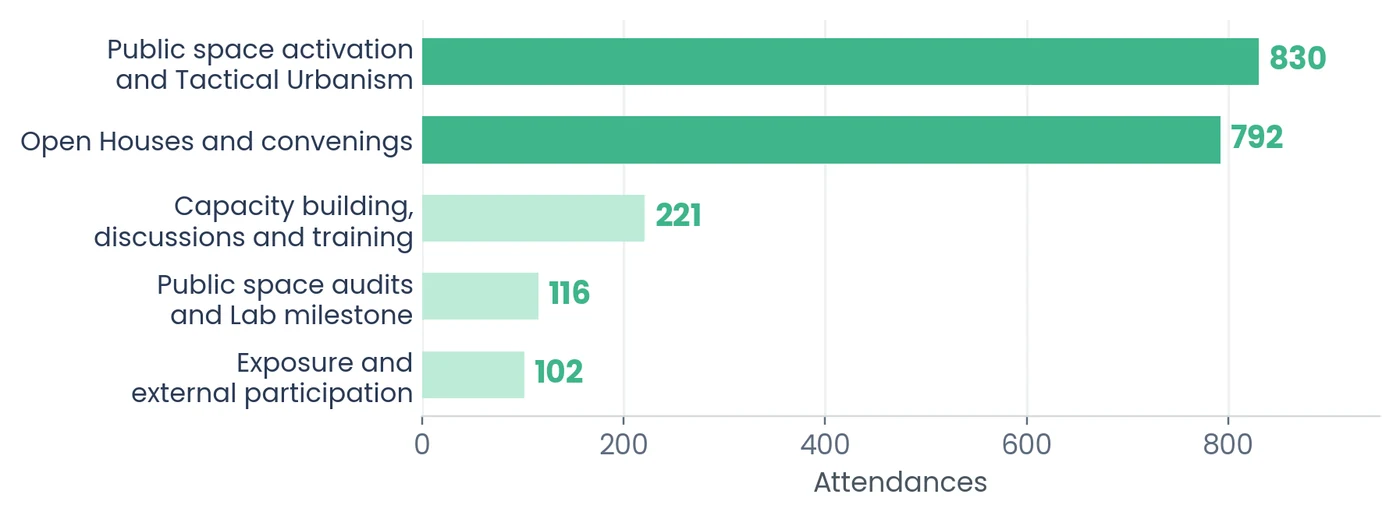
Across 2025–26, the programme documented 30 key activities and engagement of 2,061 participants.
| Activity stream | Activities | Attendances | Share of attendances |
|---|---|---|---|
| Public space activation and Tactical Urbanism | 6 | 830 | 40.3% |
| Open Houses and convenings | 8 | 792 | 38.4% |
| Capacity building, discussions and training | 11 | 221 | 10.7% |
| Public space audits and Lab milestone | 3 | 116 | 5.6% |
| Exposure and external participation | 2 | 102 | 4.9% |
| Total | 30 | 2,061 | 100% |
A year of public space action and dialogue
- April 2025830 attendancesWall painting and five Tactical Urbanism event days
- July–August 2025132 participantsOpen Houses, followed by the Manthan city-level convening
- November 2025201 participantsOpen House on adolescent rights, protection and empowerment
- February–March 202683 participantsPublic Space Lab inauguration
In April 2025, wall painting and five Tactical Urbanism event days generated 830 attendances. The five-day event at Maharana Pratap Park alone recorded 800 attendances. During July and August, Open Houses at school and community settings widened dialogue, followed by the Manthan city-level convening, which recorded 132 participants.
A November Open House on adolescent rights, protection and empowerment brought 201 participants. In February and March 2026, the programme recorded AI and craft workshops, public space audits, the Public Space Lab inauguration (83 participants), a Women's Day Open House and training of trainers. These activities paired visible work in public places with opportunities for adolescents to discuss rights, skills and the quality of the spaces they use.

Stories and News


The figures in this report describe the scale of I-India's work. The following stories show how children, families, adolescents and partners experienced that work in schools, communities and public spaces.

Girls' academic achievement becomes a village celebration
Muskan and Monika of Prem-Pathshala Jhag scored 96.6% and 97.8% respectively in the Class 12 Rajasthan Board examinations. The school projects reported a 100% result in the Class 10 and Class 12 state board examinations, with girls taking the top four positions within the school. The achievement brought parents and community members together for a rally through the village, celebrating the students and the value of girls' education.

Confidence beyond the classroom
Students of Shwetaark-Pathshala won gold, silver and bronze medals at the State Level Karate Championship in Udaipur. Four students qualified for the National Championships. The achievement reflects the value of opportunities for discipline, practice and participation alongside formal learning.
Children also enjoyed an opportunity to attend a live IPL match as special guests, an experience that brought excitement and a sense of inclusion beyond the classroom.

The Public Space Lab opens its doors
On 27 February 2026, adolescents, community members and the I-India and WRI India teams inaugurated the Public Space Lab. The ribbon-cutting marked the opening of a place for young people to meet, learn and work with others on safer, healthier and more vibrant public spaces. The programme report recorded 83 participants at the inauguration.
The Lab became a setting for workshops, dialogue and public space activity. Its launch gave a visible home to the ideas and leadership that adolescents had contributed throughout the project.

Women's health and dignity in public spaces
For International Women's Day 2026, the Public Space Lab held a celebration with WRI India and partners including Ladli, Sehat, Plush and Vending Brothers. Doctors and health workers led discussions on menstruation and hygienic practices. Adolescents raised the need for period-friendly public spaces, accessible sanitation and “Pink Toilets” in the city.
Plush and Vending Brothers donated a sanitary napkin vending machine, installed at the Public Space Lab in Sodala. In another menstrual health workshop at the Ladli Centre, a Days for Girls team engaged more than 200 girls and women from slum and migrant communities and distributed menstrual-care kits. Both activities connected health information with practical access to products and dignity in everyday life.

Health awareness reaches children and families
An eye check-up camp for Shwetaark-Pathshala children, organised with Sehat India and ASG Eye Hospital, brought specialist screening and advice to children, parents and community members. The health programme recorded 145 beneficiaries at the ASG screening. The activity helped families identify vision concerns that can affect learning and daily life.
A breastfeeding awareness session also brought mothers and young women, many from migrant worker communities, into conversation with the medical team. Participants shared traditional practices and questions, while the team addressed common myths and discussed the health of mothers and children.

Standing with families through food and festival outreach
Through the Annapurna programme, I-India distributed dry ration kits to families in slum communities connected to its school work. BCG India's CSR support made the drive possible. The activity addressed household food needs that can affect a child's ability to learn and participate in school.
During Diwali outreach in the Prem-Pathshala Jhag village cluster, the team shared groceries and raw food materials with vulnerable families. Conversations and time spent together were as much a part of the visit as the supplies themselves.

Learning through service and exchange
I-India welcomed Esha, a student from United World College in Singapore, for a service learning visit linked with Flowering Tree Inc. She met children and community members, visited projects and joined field activities. The visit offered an opportunity for exchange grounded in the everyday work of education, skills and care.
Financials & Supporters

I-India Financial Snapshot 2025-26Consolidated audited accounts | Year ended 31 March 2026
Most spending supports programmes
of total expenditure went to programme activities
Education, health, relief, skills and care for children and communities
₹327.78 lakh for programmes | 4.1% for administration
Admin 4.1%
Income mix
₹384.13 lakh total income
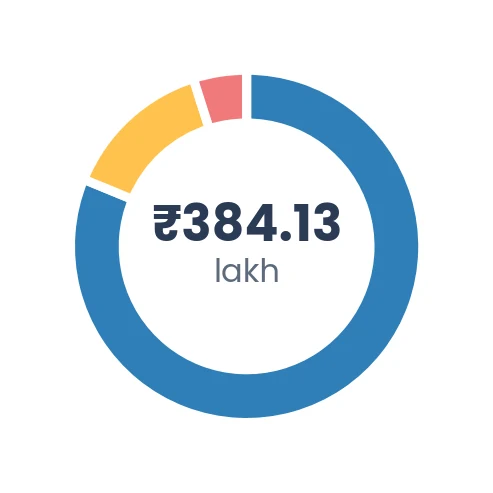
- Foreign grants and donations
81.3% ₹312.13 lakh - Domestic grants and donations
13.9% ₹53.20 lakh - Other income
4.9% ₹18.79 lakh
Expenditure by activity
₹341.91 lakh total expenditure
- Education activities85.6%₹292.59 lakh
- Relief, skills and care5.9%₹20.33 lakh
- Health activities4.3%₹14.86 lakh
- Administration4.1%₹14.13 lakh
We thank our donors and partners for the generous support provided to the causes:
Name of Partner/Donor
- Flowering Tree INC, USA
- The SAFFI Foundation, UK
- United World College of South East Asia (UWCSEA), Singapore
- Mr. Chris Howard, UK
- Kouboo, USA
- Mr. Samir Dilip Mehta & Mrs. Paromita Mehta
- Amamundum e.V., Germany
- I-India Friends, UK
- Boston Consulting Group (BCG), India
- World Resources Institute, USA
- Childline India Foundation, Mumbai
Organisational Information

Systems & Information 2025-26
| a. | Name of the Institution | Indian Institute of Data Interpretation and Analysis (I-India) |
|---|---|---|
| b. | Constitution of Institution Trust/Society/Section 8 Company | Society registered under Rajasthan Societies Registration Act, 1958 Act No. 28 of 1958 (Reg No. 99/jai/1993-94 | 24 Jun 1993 | Jaipur) |
| c. | CSR Registration No with Ministry of Corporate Affairs and Date of Registration | CSR00018589 02-12-2021 |
| d. | Registered Address | 1 Laxmi Path, Hathroi Jaipur Jaipur Rajasthan 302001 |
| f. | PAN No/Income Tax Details | AAATI0940H 12A Regn Number: AAATI0940HE20214 80G Regn Number: AAATI0940HF20096 |
| g. | The NGO established since | 1993 |
| h. | FCRA Details | FCRA Registration No.: 125560113 |
| i. | NITI Aayog Registration | Reg no. RJ1201610104028 |
Details of Office bearer/Governing Board of I-India
| SL. No. | Name | Designation |
|---|---|---|
| 1 | Dr. Jagdish Prasad Sharma | President |
| 2 | Mr. Bhagwan Sahai Singhal | Vice-President |
| 3 | Mr. Charu | Secretary |
| 4 | Dr. Krishna Gelda | Joint Secretary |
| 5 | Mr. Rupendra Kumar Sharma | Treasurer |
| 6 | Dr. G.S. Tank | Member |
| 7 | Dr. Shiv Dayal Sharma | Member |
| 8 | Dr. Sumana Vinay Pandey | Member |
| 9 | Ms. Kamni Noel | Member |
| 10 | Mr. Rakesh Telang | Member |
| 11 | Mr. Ashish Bhatt | Member |
| 12 | Mr. Kamal Kumar Bhatt | Member |
| 13 | Ms. Darshna | Member |

I-India | Jaipur, Rajasthan
23, Mahatma Gandhi Nagar, DCM, Ajmer Road, Jaipur 302021